Sediment translocation: a successful annual fish conservation project
Two years of monitoring confirm it: sediment translocation with an egg bank restored three threatened annual fish populations after the drainage of a temporary wetland, with results published in the journal Restoration Ecology.
This case study documents a project carried out by LZ Ambiental in a temporary wetland in Rio Grande do Sul, slated for drainage by a planned development, which was home to three annual fish species of conservation interest. Two years of monitoring confirm that the translocation of sediment with an egg bank worked as a restoration measure.
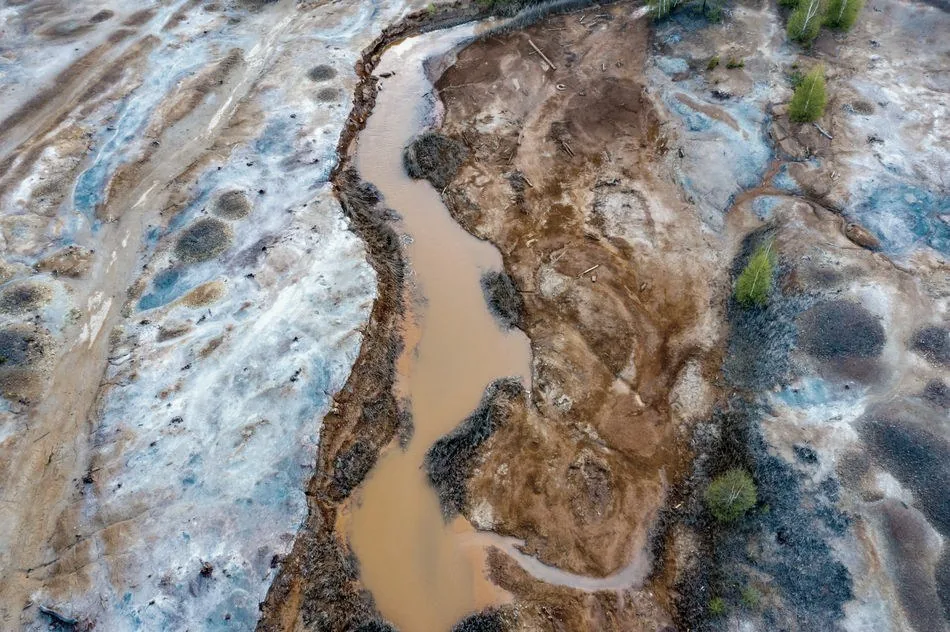
A small, shallow body of water, nearly dry for most of the year, can host entire populations of species that exist in no other type of environment. When draining the area becomes essential to the viability of a development (in cases where no APPs, Áreas de Preservação Permanente, or Permanent Preservation Areas, are present), the problem is not merely one of vegetation or exposed soil: it is the potential and irreversible loss of a wild population. The case below shows how this impasse was resolved technically, with monitored results that are now validated by scientific peer review.
The impasse: a temporary wetland, three threatened species, and a planned construction project
The source area is located in the state of Rio Grande do Sul, within a planned residential development. LZ Ambiental was hired by the client to carry out all the technical stages required by the environmental permitting process, from the sediment rescue to the creation of the receiving area and two years of field monitoring. It was a small intermittent wetland (about 1,600 m²), already showing signs of degradation, yet sustaining three species of annual fishes of the family Rivulidae: Cynopoecilus nigrovittatus (Near Threatened, IUCN), Garcialebias adloffi (Endangered, IUCN), and Megalebias wolterstorffi (Least Concern, IUCN).
Annual fishes are a biologically peculiar group: their entire life cycle fits within a single rainy season. During the dry season the population disappears: only the eggs survive, buried in the sediment in diapause, forming what the literature calls the “egg bank,” which is responsible for the persistence of the species from one year to the next.
Temporary wetlands like this one often fall outside formal environmental protection precisely because of their small size and seasonal character, a regulatory gap widely discussed in the international literature. In this case, however, the municipal environmental agency (Secretaria de Meio Ambiente, the Municipal Environment Secretariat) made the viability of the development conditional on the creation of a new wetland nearby and on the translocation of the sediment containing a viable egg bank, under a specific authorization for the handling of annual fishes.
Project design
The receiving area was selected within a municipal conservation unit, 8 km from the donor area, following the technical criteria recommended by the international IUCN/SSC guidelines for conservation translocations: climatic and land-use proximity, geomorphic similarity, and low anthropogenic disturbance. At the receiving site, about 40 cm of topsoil and herbaceous vegetation were removed, with small earthen berms built along the edges to promote water retention, resulting in a wetland of approximately 1,200 m², with an expected maximum depth of 40 cm during the rainy season.
The sediment was collected from three intact stretches of the donor area, after the natural drying of the water layer. Blocks approximately 40 cm deep were excavated while maintaining the original vertical stratification, the zone where the literature concentrates most of the viable eggs, in order to maximize the chance of transferring the entire egg bank. Of the total 274 m³ of available sediment, 52 m³ (130 m²) were effectively translocated, a difference that reflects logistical constraints and the selective transfer of the intact stretches only. The sediment was protected with a geotextile blanket to prevent siltation from surrounding soils.
Monitoring extended over two complete seasonal cycles (2023-2024), with three sampling campaigns per cycle, coinciding with the final stages of the life cycle of annual fishes in the region. Individuals captured with a hand net were identified, sexed, photographed, and returned to the point of capture.
Finding 1: all three species hatched in the very first rainy season
The first sign of success came quickly: in the first campaigns after the natural filling of the receiving area, in September 2023, all three translocated species had already hatched, direct evidence that the egg bank transferred along with the sediment was viable. In total, 66 individuals were recorded in the first cycle, with Cynopoecilus nigrovittatus accounting for 71.2% of the captures, Garcialebias adloffi for 21.2%, and Megalebias wolterstorffi present but already scarce, disappearing from the samples from November onward.
Finding 2: the population grew 118% in the second cycle, confirming persistence
The decisive test of any translocation is not the first hatching but the second: it confirms that the individuals born in the created area completed their life cycle and left, themselves, a new viable egg bank. After a full dry period, the receiving area filled again in May 2024, and the second cycle recorded 144 individuals, more than double the first. Cynopoecilus nigrovittatus grew 172% in abundance between the two cycles; considering the three species together, the increase was 118%. At the end of the two years, the 210 total captures confirm that the three species persisted into a second generation in the created area, a result that the authors themselves classify as evidence that sediment translocation can establish self-sustaining populations, and not merely short-lived remnant individuals.
From field execution to international scientific publication
The complete execution of the project in the field, from the sediment rescue to the monitoring of the three species across two seasonal cycles, was under the technical responsibility of LZ Ambiental, hired to make the environmental permitting of the development feasible. Once monitoring was concluded, the field data were systematized in partnership with researchers from partner institutions, and gave rise to a peer-reviewed scientific article.
The article was published in 2025 in Restoration Ecology, an international journal of the Society for Ecological Restoration, one of the world's leading references in the science of ecological restoration. The publication represents formal scientific validation, through independent peer review, that a mitigation measure carried out in the field worked as expected, an uncommon distinction in permitting projects. For species as sensitive as annual fishes, nearly half of the Neotropical species of the family Rivulidae are considered potentially threatened, it is the first published empirical evidence that sediment translocation also works for a group of vertebrates, with the potential to influence other permitting projects in Brazil and abroad.
The counterpoint: not all species responded in the same way
The aggregate results are positive, but a technically honest reading of the study requires looking species by species, and recognizing that success in aggregate monitoring is not synonymous with uniform success.
- Megalebias wolterstorffi remained rare across both cycles. The largest of the three species was never detected at the end of the wet period, and accounted for only 4.3% of the total captures. This is consistent with the known ecology of annual fishes, but indicates that, on its own, this species may require targeted population reinforcement to ensure its long-term persistence.
- Garcialebias adloffi showed reduced detectability at the end of the season. This likely reflects a preference for specific microhabitats rather than actual absence, a known limitation of the active net-sampling method.
- The proportion of females increased over the course of each season, across all species. This pattern is already described in the literature, associated with higher male mortality due to display behavior and territorial disputes, expected and not to be interpreted as a project failure.
- There are technical risks inherent to the technique itself. Sediment translocation may transfer, along with the egg bank, unidentified invasive species or pathogens, in addition to physically impacting the donor area, risks that must be mitigated through extraction limits and recovery of the source area.
- The monitoring period is still short. Two cycles demonstrate initial viability and a second generation, but do not guarantee long-term persistence. The authors themselves point out that the reduction of eggs between hydroperiods was not quantified, and that the monitoring had no replicates at other receiving sites.
What this means for the environmental permitting of new developments
For construction companies operating in areas with a potential presence of sensitive fauna, especially in regions with temporary wetlands, frequently underestimated in conventional surveys, this case sets a relevant precedent: sediment translocation is a viable alternative, of relatively low cost and rapid implementation, compared to the traditional options of ex situ reproduction, expensive and logistically complex, or the translocation of adults, which rarely ensures real population persistence.
This is because the sediment carries, along with the fish egg bank, entire dormant communities, including invertebrates and seed banks, accelerating the recovery of the ecosystem as a whole. The approach also aligns with international “no net loss” and Nature-based Solutions policies, increasingly present in the financing and permitting requirements of large developments.
It is important to note that this is the first published study to formally test the technique for a group of vertebrates; until then, sediment translocation was an established practice only for plants and invertebrates. The results are favorable, but there is not yet a consolidated track record of multiple cases that would allow the technique to be treated as a standardized, low-risk solution for any context: each application must be evaluated and monitored individually.
Practical recommendations
- Consider sediment translocation as an emergency measure, not as a standard first option. It is most appropriate when the destruction of the donor area is imminent and unavoidable, and not as a substitute for in situ conservation whenever that alternative is technically viable.
- Define clear, measurable success criteria from the planning stage. Hatching in multiple seasons, evidence of a viable egg bank, compatible hydroperiods, and recovery of associated aquatic communities should be included as formal indicators in the monitoring plan.
- Monitor over multiple hydroperiods before declaring the measure a success. Two cycles are the minimum to confirm persistence into a second generation, but they do not replace the medium-term follow-up recommended by the IUCN/SSC guidelines.
- Plan targeted population reinforcement for naturally rare species. Species with naturally low abundance may require specific supplementation and complementary detection methods, such as direct egg sampling or environmental DNA.
- Protect the donor area during and after extraction. Extraction volume limits and recovery actions for the source area should be included in the translocation plan.
- Technically document the choice of the receiving site. Climatic, geomorphic, and land-use correspondence between the donor and receiving areas, following IUCN/SSC criteria, should be included in the project's technical report.
Methodological note
This account is based on a case study conducted in situ over two years, with a single donor area and a single receiving area, a design that confirms the viability of the technique in this specific context but does not allow statistical generalization to other areas, species, or regions of Brazil. The reduction of the egg bank between hydroperiods was not directly quantified, and the monitoring period is adequate to confirm short-term persistence but insufficient to assert long-term population sustainability. The technical execution was the responsibility of LZ Ambiental; the scientific systematization and submission to peer review were conducted in co-authorship with partner research institutions.
Study source: Godoy, R.S.; Weber, V.; Hoffmann, P.; Lanés, L.E.K.; Zapata, R.; Alonso, F.; Stenert, C.; Maltchik, L. (2025). “Topsoil translocation as a restoration tool for endangered seasonal killifish in temporary wetlands”. Restoration Ecology. DOI: 10.1111/rec.70262. Study conducted by LZ Ambiental in collaboration with partner research institutions.
LZ Ambiental conducts environmental permitting, wildlife conservation, and ecological restoration projects in sensitive areas. To assess whether sediment translocation can make your development feasible in areas with threatened species, talk to our technical team.